Audrey Hepburn: the Ascendant as pure form of presence
The Moon and Venus near the Ascendant help explain why her image was perceived as natural grace.
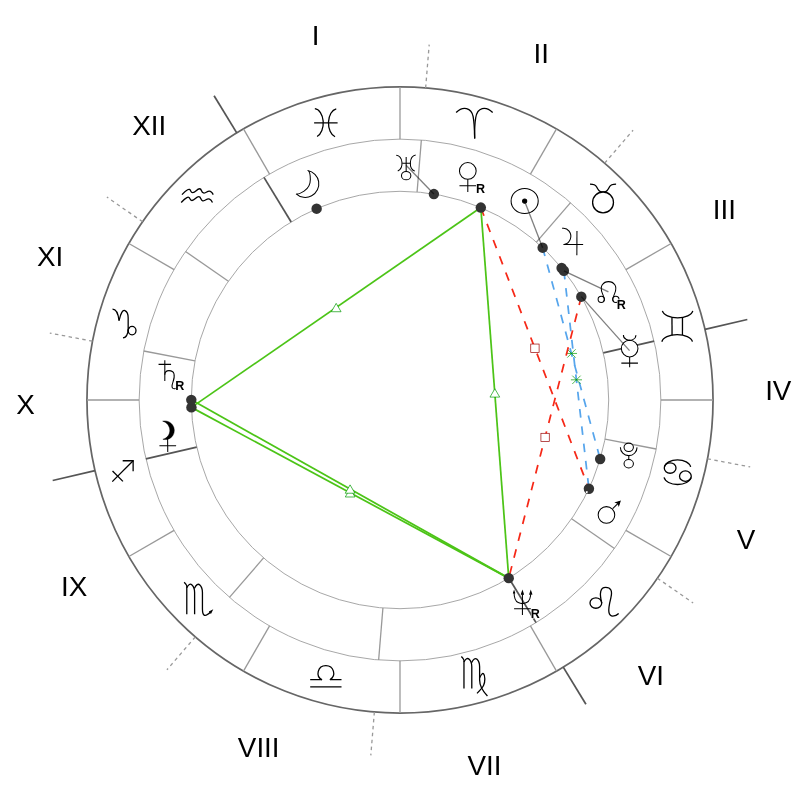
Audrey Hepburn's chart is not just a story about charm. It is a clear example of how presence can become form. With the Moon and Venus near the Ascendant, the image is not merely attractive. It feels emotionally legible: grace appears as a way of entering the room.
The Ascendant as body language
The Ascendant shows how a person meets the world. When the Moon and Venus stand close to it, first impression becomes both visual and emotional. Venus gives proportion, taste, line, and refinement. The Moon adds softness, responsiveness, and a face that seems to register subtle shifts in atmosphere.
In such a chart, beauty is not separate from behavior. It appears in gesture, pause, posture, movement, clothing, and the ability to take space without taking it harshly. This is the Ascendant working as a living form, not just as a sign on the horizon.
Grace without heaviness
The strength of this combination is natural persuasion. The person does not have to insist on refinement; it is visible before words arrive. In Hepburn's public image, lightness does not feel empty. It feels disciplined: little excess, much nuance.
There is a shadow, too. When the image is so closely tied to other people's response, one may learn to live through reflection: to be pleasant, delicate, flawless, and never too much. The mature form appears when softness no longer requires self-erasure.
What to take back to your chart
If you have planets near the Ascendant, especially the Moon or Venus, notice how your body and manner become part of your destiny. What do people read before you explain yourself? Where does style help you be seen, and where does it become an obligation to maintain an image?
Hepburn's chart reminds us that the Ascendant is more than a first impression. It is the form through which the inner life becomes visible.
Want to read this in your own chart?
Open in bot