Bob Marley: the eleventh house and music as a shared future
Through the eleventh house we can see how a personal voice becomes the language of community and hope.
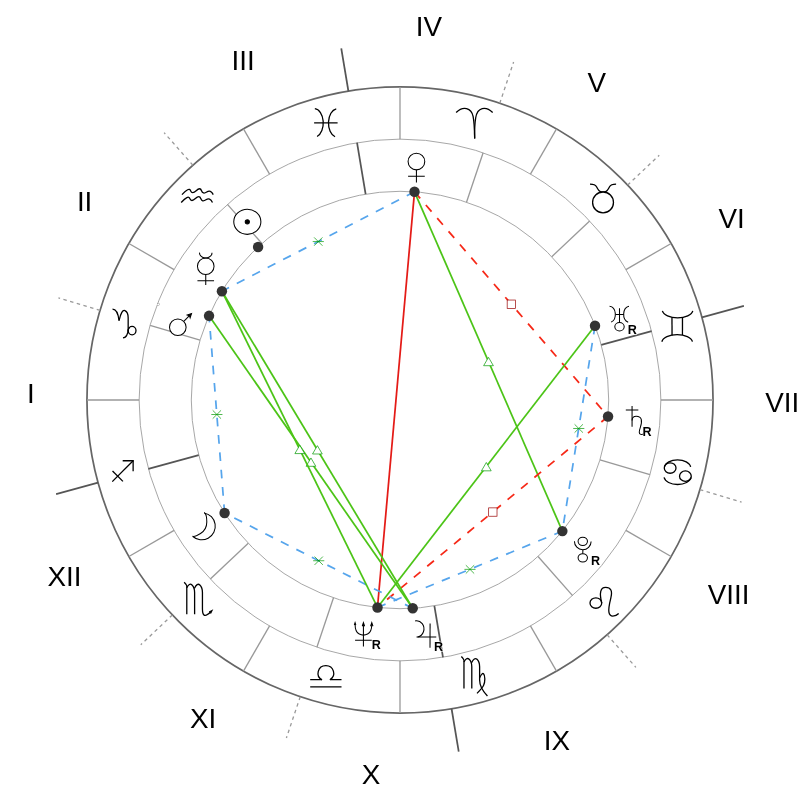
In Bob Marley's chart, the eleventh house is useful as a language for music that does not remain private. A personal voice becomes a gathering place: for hope, memory, protest, faith, and shared rhythm. The talent matters, but so does the field of people that forms around it.
The eleventh house as a field of people
The eleventh house is often summarized too narrowly as friends, groups, or plans. In practice it is deeper. It shows where personal energy moves beyond private biography and begins to live inside a collective. When this house is strong, the person rarely remains only an isolated individual. Their idea, voice, or work looks for a community that can recognize itself in it.
With Marley, this is easy to hear through music. The song does not address only one listener. It opens a shared emotional space. The eleventh house helps explain why music can become more than a piece of work: it can become a sign of belonging.
An idea that keeps rhythm
The strength of the eleventh house is the ability to imagine a future beyond personal success. In this key, music does not only entertain. It gathers people around values, language, and hope. A simple melody can become social fabric.
The shadow is the loss of the person inside the symbol. When many people need an image, the group can begin to demand permanent loyalty to that image. Then the task is to protect the living human being inside the collective meaning.
What to take back to your chart
If your eleventh house is emphasized, ask: which people amplify my voice, and which only use it? What idea makes me larger than a private story? Where can my gift become not performance, but contribution?
Marley's chart shows a mature eleventh-house pattern: a personal rhythm becomes shared without losing its heart.
Want to read this in your own chart?
Open in bot